EN
EN


Why is DO Monitoring Important in Environmental Protection?
Imagine yourself walking beside a lively and pristine stream. You take a deep breath and absorb the vibrant energy it brings. Its beauty goes beyond the aesthetics of the flowing water. Beneath the surface lies an invisible element that is a key component for all aquatic life: Dissolved Oxygen, or DO. Monitoring DO is like taking the pulse of a river, lake, or ocean. For environmental scientists, water treatment operators, and ecologists, measuring DO is more than a technical routine—it narrates the health of the ecosystem and gauges the success of our environmental protection efforts. Let's explore why tracking this vital gas is a fundamental practice for safeguarding our water resources.
What Exactly is Dissolved Oxygen?
First, let's clarify what we're measuring. While a water molecule (H2O) contains oxygen, the dissolved oxygen we monitor enters the water from the atmosphere. It gets mixed in through turbulence at rapids and waterfalls and is produced as a byproduct of photosynthesis from aquatic plants and algae. Fish, invertebrates, bacteria, and nearly all organisms living in water depend on this dissolved oxygen to breathe. The amount of DO in water is a delicate balance, constantly influenced by factors like temperature (cold water holds more oxygen), salinity, atmospheric pressure, and biological activity.
Why is Tracking Dissolved Oxygen So Critical?
Dissolved oxygen is the fundamental currency of aquatic ecosystem health. Its concentration directly dictates what kind of life a water body can support.
A Vital Sign for Aquatic Life
Every aquatic species has a specific DO requirement for survival. Cold-water fish like trout need high levels (often above 8 mg/L), while some carp and catfish can tolerate lower concentrations. When DO levels fall below 5 mg/L, many species become stressed. A drop below 2 mg/L creates hypoxic conditions, leading to fish kills and the formation of "dead zones" where only oxygen-thriving anaerobic bacteria can survive. These events are ecological disasters, causing local food webs and biodiversity to collapse.
A Primary Indicator of Pollution
DO serves as a superb, real-time indicator of organic pollution. Excess nutrients from agricultural runoff or untreated sewage can trigger massive algal blooms. When these algae die, the bacteria decomposing them consume enormous amounts of oxygen, causing a sharp drop in DO—a process called eutrophication. Therefore, a sustained downward trend in DO levels is a major red flag, signaling that a water body is under significant stress from pollution.
A Key Metric for Compliance and Restoration
Governments worldwide establish minimum DO standards for various water bodies, including drinking water sources, fisheries, and recreational waters. Accurate and reliable environmental monitoring with dissolved oxygen meters is essential for industries and municipalities to demonstrate compliance with discharge permits. Furthermore, for projects aimed at restoring impaired waterways, tracking DO levels over time is the primary metric for measuring success. It answers the core question: "Are our cleanup efforts actually making the water healthier for life?"
The Evolution of Monitoring: From Manual to Optical
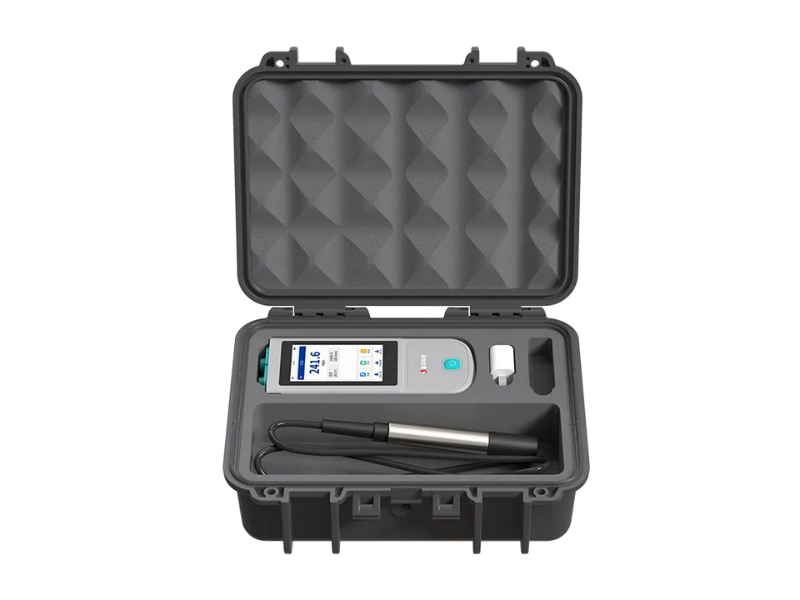
For decades, the standard tool was the electrochemical probe, which required frequent calibration, membrane replacements, and was prone to unstable readings from flow or fouling. Its maintenance was a constant challenge. The arrival of optical dissolved oxygen sensors revolutionized the field. These modern probes operate on the principle of fluorescence quenching. A special dye at the sensor tip is excited by light; the intensity and duration of the fluorescence it emits are inversely affected by the concentration of oxygen molecules present. The sensor measures this change to calculate a precise DO value.
This technology is a true game-changer for field professionals. Optical sensors offer superior long-term stability, require minimal maintenance (with no membranes or electrolytes to replace), have faster response times, and are largely unaffected by water flow or common pollutants that foul traditional probes.
The Bigger Picture: DO in Context
Expert environmental monitoring understands that DO should not be viewed in isolation. Its true power as an indicator is unlocked when correlated with other key parameters, which is why multi-parameter sondes and integrated monitoring stations are so valuable.
pH and DO: Photosynthesis increases DO and also raises pH. Conversely, respiration and decomposition lower both.
Temperature and DO: As mentioned, warmer water holds less oxygen. A sudden temperature spike can therefore trigger a rapid DO crash.
BOD/COD and DO: Biochemical Oxygen Demand (BOD) and Chemical Oxygen Demand (COD) are lab tests that estimate how much oxygen a water sample will consume. High BOD/COD readings forecast a potential future drop in environmental DO levels.
By tracking these parameters together, environmental managers can distinguish between natural seasonal DO fluctuations and a crisis caused by a pollution event, enabling smarter and more timely interventions.
Investing in the Future of Our Waters
As we face growing challenges from climate change, urbanization, and agricultural intensification, the role of precise and reliable environmental monitoring has never been more critical. Advanced tools like robust optical DO meters are more than just instruments; they are our extended senses in the water. They provide the actionable data necessary to protect, manage, and restore our precious aquatic ecosystems. Ensuring healthy dissolved oxygen levels is synonymous with ensuring vibrant, resilient, and life-sustaining waterways for generations to come.