EN
EN


How to Select a Biochemical Oxygen Demand Analyzer Manufacturer?
Looking Past the Spec Sheet When Evaluating a BOD Analyzer Manufacturer
Selecting a biochemical oxygen demand analyzer manufacturer goes far beyond comparing detection limits and sample throughput numbers printed on a brochure. The instrument on the lab bench is the visible tip of a much larger iceberg. Beneath it sits the manufacturer's grasp of microbial respiration dynamics, the stability of their sensor supply chain, and their willingness to back a method that remains notoriously sensitive to environmental variables.
A telling moment occurred during a municipal water quality lab‘s transition from the traditional five-day dilution method to a modern respirometric system. The team picked a device with impressive paper specs, only to find that the manufacturer’s technical support had zero experience with samples containing high levels of nitrification inhibitors. The resulting data showed systematically low BOD values for wastewater influent carrying industrial discharge. The problem wasn‘t the sensor—it was the application knowledge gap between the manufacturer’s engineering team and the lab‘s real-world sample matrix. That gap took four months of trial and error to close, a delay no specification sheet had predicted.
How Measurement Principles Affect Real-World Performance
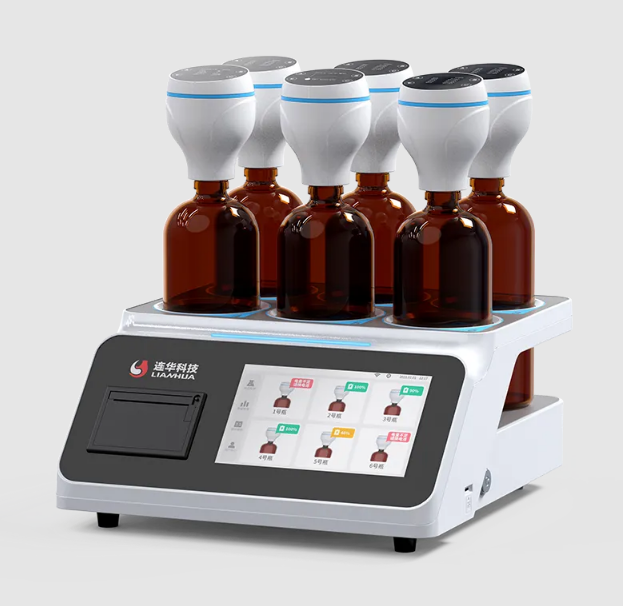
Not all BOD analyzers measure the same thing the same way. The standard dilution and seeding method (ISO 5815-1:2019) remains the reference procedure, but most automated instruments today operate on the manometric principle, tracking pressure changes in a closed system as microorganisms consume oxygen. The sensor system itself matters enormously. Modern integral pressure sensors have largely replaced mercury manometers, eliminating a significant lab safety hazard while improving measurement consistency across multiple sample channels.
However, different technologies handle sample matrices very differently. A pressure-based sensor calibrated for municipal sewage may produce erratic readings when hitting landfill leachate containing volatile fatty acids. A manufacturer that understands these matrix effects—and can advise on seeding adjustments or pre-treatment steps—saves a lab from months of frustrating method development. That application expertise often distinguishes a component assembler from a true water analysis specialist.
Compliance With Industry Standards as a Baseline
Any credible BOD analyzer manufacturer should demonstrate clear alignment with established methods. The benchmark in North America remains Standard Methods 5210B for the five-day BOD test, which specifies sample handling, incubation at 20°C, and dissolved oxygen measurement protocols. Internationally, ISO 5815-1:2019 governs the dilution and seeding approach, with detailed requirements for reagents, apparatus, and interference management.
A reliable indicator of manufacturer quality is whether their calibration standards are traceable to certified reference materials. During a regulatory audit, a lab discovered that their BOD analyzer manufacturer could not provide documentation linking their in-house calibration solutions to any national standard. The lab spent weeks re-validating their entire test method. Manufacturers that treat calibration traceability as an afterthought inevitably pass that risk down to the end user.
The Real Cost of Sensor Supply Chain Disruptions
The dissolved oxygen sensor sits at the heart of any BOD analyzer. Where that sensor comes from carries long-term implications. Some manufacturers build their own sensing elements; others source them from third-party suppliers and integrate them into finished products. Neither path is automatically better, but the distinction shows up when something goes wrong.
A lab supervisor at a contract testing facility once shared an experience where a third-party sensor became obsolete without warning. The sensor supplier discontinued the component, and the BOD analyzer manufacturer scrambled to qualify an alternative. During the six-month gap, the lab had to revert temporarily to the dilution method for certain compliance samples, more than doubling the labor hours for those tests. Manufacturers with in-house sensor production typically retain the expertise to recalibrate, repair, or evolve designs as reference methods shift. That control matters far more during equipment lifetime than any one-time purchase discount.
Application Support Capabilities Across Manufacturer Types
Every biochemical oxygen demand analyzer measures oxygen depletion, but how that measurement translates into a valid, defensible result varies dramatically with sample type. Industrial effluents, landfill leachate, saline waters, and samples containing volatile organic compounds each impose distinct challenges. The table below illustrates typical support capabilities and their operational impact.
| Support Capability | Impact on Lab Operations | Typical Provider Profile |
|---|---|---|
| Basic installation and calibration training | Shortens initial setup by 1–2 days | Most manufacturers |
| Troubleshooting for complex industrial samples | Reduces repeat tests by 15–30% | Specialized manufacturers |
| Regulatory compliance documentation assistance | Cuts audit preparation time by up to 50% | Experienced manufacturers |
| Custom method development for non-standard samples | Enables testing of new sample types | Research-oriented manufacturers |
What Market Data Reveals About Manufacturer Maturity
The BOD analyzer market has matured significantly. In 2024, domestic BOD analyzer sales in China reached approximately 6,500 units, with 2025 figures projecting growth to about 9,200 units—an increase of roughly 41.5%. Mainstream product prices range between 15,000 and 58,000 RMB. The share of instruments supporting cloud platforms and wireless data transmission jumped from roughly 25% in 2024 to about 35% in 2025. By 2026, the overall Chinese BOD analyzer market is expected to exceed 420 million RMB, maintaining an annual compound growth rate above 8.5%.
These numbers suggest a market moving beyond basic functionality toward connectivity and data traceability. A manufacturer that stays current on these trends—offering instruments that integrate with laboratory information management systems and regulatory reporting platforms—provides a clear operational advantage over one still shipping isolated data loggers.
Manufacturing Depth and Supply Chain Integration
A biochemical oxygen demand analyzer manufacturer that controls its own supply chain for critical components offers a different value proposition than one acting purely as an assembler of off-the-shelf parts. Beyond sensors, consider consumables: reagents, sensor caps, membrane kits, and calibration standards lock a lab into an ongoing relationship with the manufacturer. A competitive initial purchase price loses its appeal quickly if proprietary consumables become expensive to source or if supply disruptions leave the instrument idle. Manufacturers such as Lianhua maintain integrated production capabilities that span instrument assembly and consumable formulation, reducing dependency on external suppliers and ensuring consistent quality across the full testing workflow.